TIMING CHAIN &
DUAL VANOS OVERHAUL
The Job
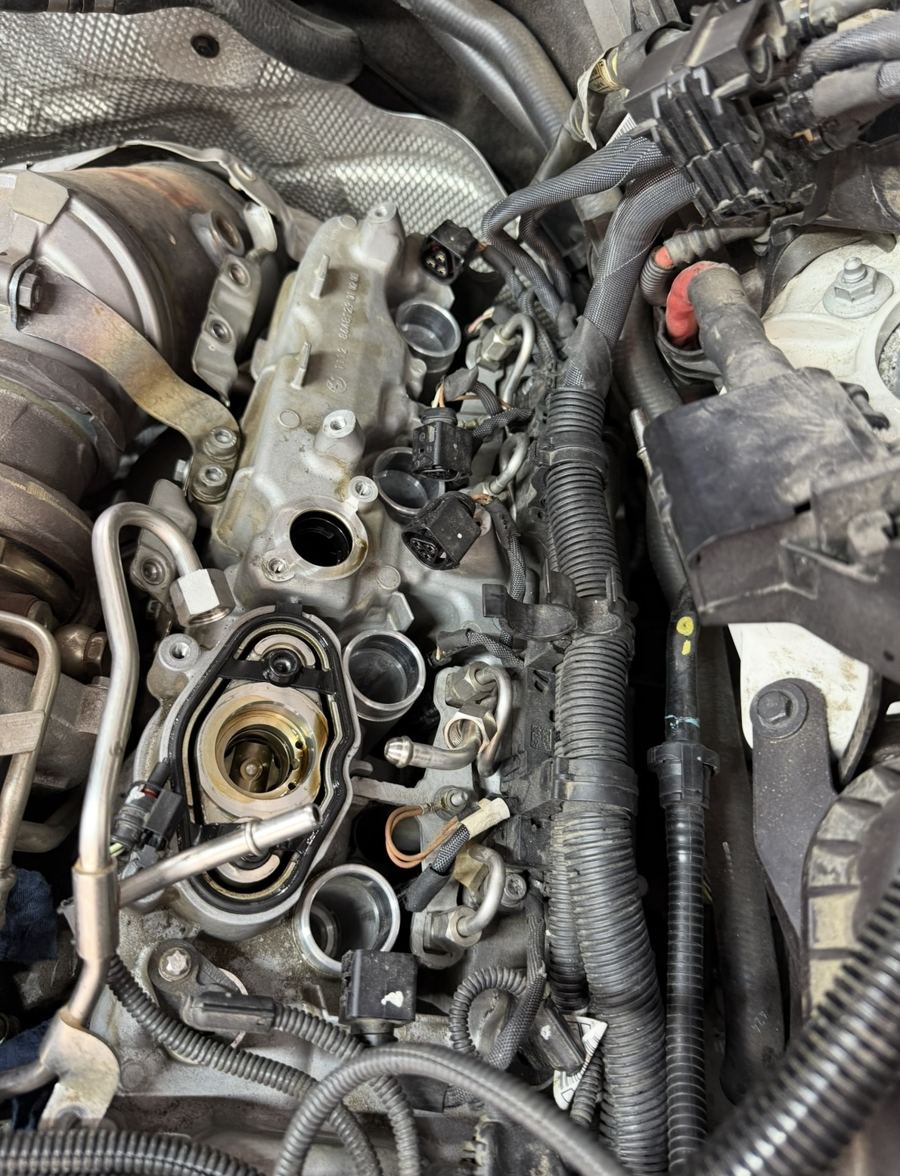
This one came in for a timing chain and dual VANOS overhaul — the kind of job that means pulling the front timing cover off the block to get proper access to the intake and exhaust camshaft adjustment units. Once the cover's off, you're looking straight down at the heart of the variable valve timing system: the timing chain, both VANOS solenoid housings, and the camshaft sprockets that drive the whole assembly.
On these B-series engines, VANOS wear and timing chain stretch tend to show up together over time — rattly cold starts, a rough idle, or a check engine light pointing at camshaft position correlation are usually the first signs. Once we're in this deep, we go through the chain, guides, tensioner, and both VANOS units rather than just chasing the one symptom, since it's all the same labour to get there.
What We Found & Replaced
- Timing chain showing measurable stretch beyond service tolerance
- Worn chain guides and tensioner rail contributing to chain slap
- Intake and exhaust VANOS solenoid housings — orange seal kits fitted as part of the rebuild
- Camshaft position sensors checked and reseated for correct correlation
- Full valve cover and head gasket surfaces cleaned and inspected before reassembly
Reassembly & Timing
Getting the camshafts back into correct timing is where this job lives or dies. We use the factory locking tools to hold the crank and both camshafts in their reference positions while the new chain goes back on under the correct tensioner preload — get this even slightly wrong and you're looking at a rough-running engine at best, or bent valves at worst.
Once everything's torqued to spec and the locking tools are out, the engine gets a full cold start and warm-up cycle on the hoist before it goes anywhere near a road test. We're checking idle quality, listening for any residual chain noise, and confirming VANOS solenoid response across the rev range with the diagnostic tool plugged in.
Why It Matters
A stretched timing chain or worn VANOS unit doesn't usually fail outright — it just quietly costs you performance, fuel economy, and smoothness until one day it doesn't. Catching it at this stage, with the cover already open, is the efficient way to deal with both issues in the one job rather than coming back into the same area twice.
JOB GALLERY